


Study in Malaysia from Bangladesh
Malaysia is one of Asia’s most popular study destinations for Bangladeshi students. The country offers internationally recognised qualifications, English-medium programmes, modern campuses and comparatively affordable tuition fees. Its multicultural environment, welcoming communities and convenient location make it easier for international students to adapt to life abroad.
Students can choose from public universities, private universities, university colleges and international branch campuses. Malaysian institutions offer programmes in business, engineering, computer science, medicine, hospitality, communication, design and many other fields. With a strong academic environment and practical learning opportunities, Malaysia provides an excellent pathway to international education and future career development.
Overview of Studying in Malaysia from Bangladesh
Studying in Malaysia gives Bangladeshi students access to quality international education without the high expenses commonly associated with destinations such as the United Kingdom, Australia, Canada or the United States. Students can pursue foundation, diploma, bachelor’s, master’s and doctoral programmes at recognised Malaysian institutions.
Many universities deliver their courses in English, helping international students participate confidently in lectures, assignments and group projects. Some Malaysian institutions also collaborate with universities in the United Kingdom, Australia and other countries, allowing students to earn internationally recognised qualifications while completing all or part of their studies in Malaysia.
Malaysia is also known for its diverse student community. Bangladeshi students can meet people from different countries, experience new cultures and develop the communication skills required for an international career.
Why study in Malaysia from Bangladesh?
Malaysia combines academic quality, affordability and a comfortable lifestyle. Tuition fees and living expenses are generally more manageable than in many Western countries, making it attractive for students and families seeking a valuable international education within a reasonable budget.
The country offers a wide range of English-taught programmes, internationally connected universities and industry-focused courses. Students can gain practical knowledge, participate in academic projects and build professional skills relevant to today’s employment market.
Malaysia’s multicultural society is another important advantage. International students can practise their faith, find familiar food and live in an environment that respects different traditions and lifestyles. The relatively short travel distance from Bangladesh also makes it easier to stay connected with family.
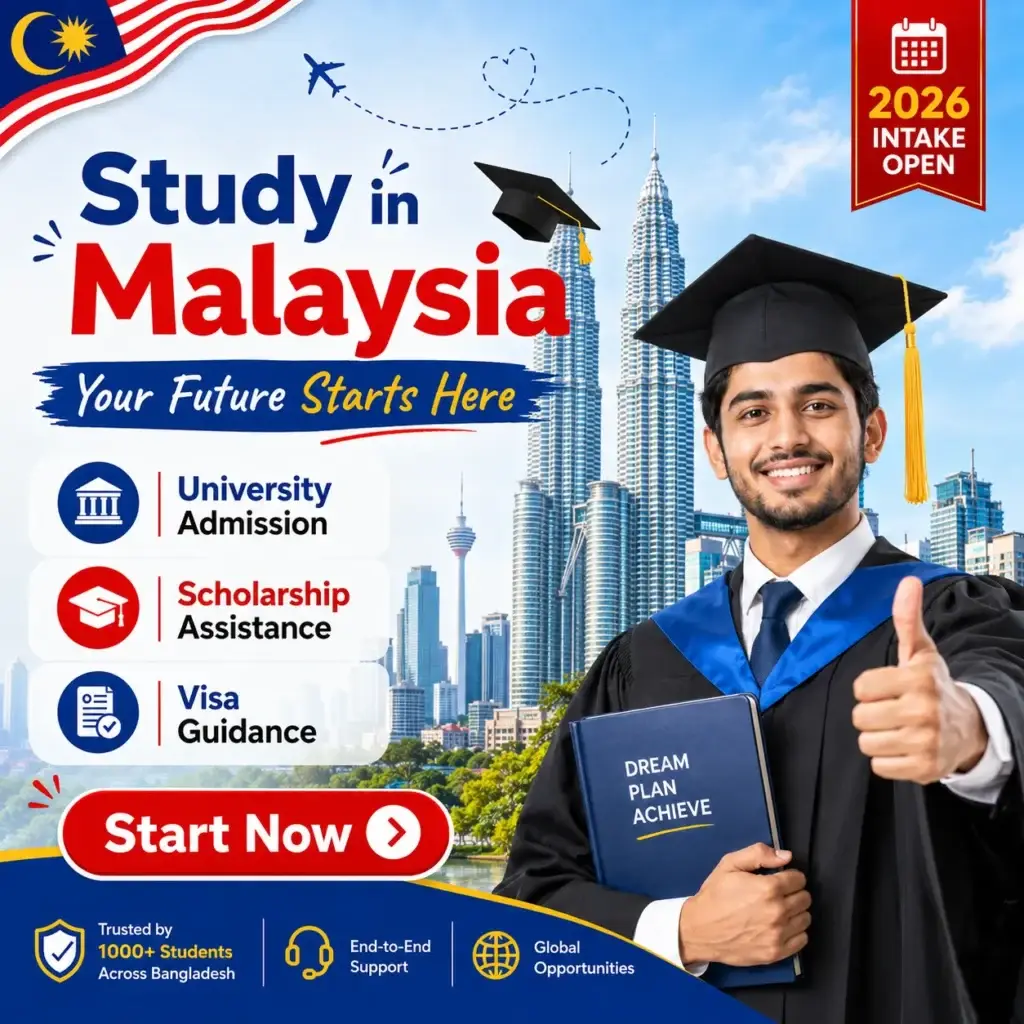
Benefits of Studying in Malaysia
A Malaysian education can provide both academic and personal development. Students benefit from modern learning facilities, qualified lecturers, multicultural classrooms and programmes designed to meet international standards. Many institutions provide access to libraries, laboratories, innovation centres, student clubs and career-support services. Students can strengthen their English communication, develop independence and build relationships with classmates from around the world. Malaysia can also serve as a pathway to further education. Depending on the programme and institution, students may have opportunities to transfer credits, complete part of their degree abroad or progress to postgraduate study in Malaysia or another country.
Top Courses to Study in Malaysia
Malaysia is an excellent destination for Bangladeshi students seeking internationally recognised qualifications, affordable tuition fees and a diverse range of English-taught programmes.
Here are some of the most popular courses to study in Malaysia, along with their estimated duration and tuition fee ranges:
| Course | Description | Duration | Estimated Tuition Fee |
|---|---|---|---|
| Engineering | Malaysian universities offer engineering programmes in civil, mechanical, electrical, electronic, chemical and mechatronics engineering. These courses combine theoretical knowledge with practical laboratory training and industry-focused projects. | 4 years | RM 25,000–RM 50,000 per year |
| Information Technology | Information technology programmes cover software engineering, cybersecurity, artificial intelligence, data science, networking and information systems. Students develop practical technical skills through projects, internships and industry-based learning. | 3–4 years | RM 20,000–RM 45,000 per year |
| Business and Management | Business programmes include marketing, finance, accounting, human resource management, entrepreneurship and international business. Students develop leadership, communication and decision-making skills for the global corporate environment. | 3–4 years | RM 20,000–RM 40,000 per year |
| Nursing | Nursing programmes provide theoretical medical knowledge, clinical training and practical healthcare experience. Graduates may pursue opportunities in hospitals, clinics, community healthcare and specialised nursing fields. | 4 years | RM 25,000–RM 45,000 per year |
| Hospitality and Tourism | Hospitality and tourism courses cover hotel management, event planning, culinary operations, tourism marketing and customer service. Students receive practical preparation for careers in hotels, resorts, airlines and tourism organisations. | 3–4 years | RM 20,000–RM 40,000 per year |
Important: Tuition fees and programme duration vary depending on the university, course, intake and academic level. Additional expenses may include registration, student visa, medical insurance, accommodation, books and living costs.

Book A Consulting
Fill up the following form to get assessed for up to 70% scholarship.

Popular Courses for Bangladeshi Students
Malaysian universities offer programmes across almost every major academic field. Popular choices among Bangladeshi students include business administration, accounting, finance, marketing, computer science, software engineering, cybersecurity, artificial intelligence, electrical engineering, mechanical engineering and civil engineering.
Students also choose hospitality and tourism, mass communication, graphic design, architecture, public health, pharmacy and other specialised subjects. The most suitable programme depends on the student’s academic background, English proficiency, budget and long-term career goals.
Before applying, students should review the programme curriculum, entry requirements, accreditation, internship opportunities and potential career outcomes.
Malaysian Universities and Institutions:
Malaysia has public universities, private universities, university colleges and international branch campuses. Each type of institution offers different advantages regarding tuition fees, programme availability, campus environment and admission requirements.
Public universities are often known for research, large campuses and competitive admission. Private universities usually provide flexible intakes, specialised programmes and strong international partnerships. International branch campuses allow students to study programmes connected to established overseas universities while living in Malaysia.
Students should select an institution based on academic recognition, programme quality, location, facilities, student support and total study cost rather than choosing only by ranking or tuition fees.
Scholarships for Bangladeshi Students:
Scholarships and tuition discounts may be available through Malaysian universities, government programmes or institutional funding. Opportunities can be based on academic achievement, leadership experience, financial need, sports performance or other criteria. Scholarships may cover part of the tuition fee rather than the full cost of studying. Students should read the eligibility conditions carefully and confirm whether the award is renewable for future semesters. Applying early, maintaining strong academic results and submitting complete supporting documents can improve a student’s chances of receiving financial assistance.

Malaysia Student Visa Process
After receiving an offer from a recognised Malaysian institution, international students must complete the student-pass process. The university normally guides the applicant through the required documentation and submits the relevant application through the authorised system. Students may need to provide academic documents, passport copies, photographs, health-related information, financial evidence and other supporting materials. Once the required approval is issued, the student can follow the instructions for travel, medical screening and student-pass endorsement. Visa requirements and processing procedures can change. Students should rely on updated instructions from their university and the relevant Malaysian authorities before making travel arrangements.
The first step is selecting a suitable programme and university based on academic background, budget and career goals. The applicant then prepares the required documents and submits the university application. After the university reviews the application, it may issue an offer letter or request additional documents. Once the student accepts the offer and pays the required fees, the visa process can begin. After visa approval, the student can arrange accommodation, flights, insurance and other pre-departure requirements. Careful document preparation and timely communication with the institution help reduce delays.
Start Your Study Journey in Malaysia
Choosing the right university, programme and budget requires careful planning. Our education consultants help Bangladeshi students understand their available options, prepare their applications and complete the admission and student-visa process. From programme selection and document preparation to visa guidance and pre-departure support, we provide assistance throughout every stage of the journey.
Study in Malaysia Guidance FAQ
Is Malaysia a good study destination for Bangladeshi students?
Yes. Malaysia offers internationally recognised qualifications, English-taught programmes, modern campuses and comparatively affordable tuition fees and living costs.
What are the entry requirements for studying in Malaysia?
Requirements vary by university and programme. Students generally need academic certificates, transcripts, a valid passport, photographs and proof of English-language proficiency.
What are the most popular courses in Malaysia?
Popular subjects include engineering, information technology, business, accounting, finance, hospitality, tourism, architecture, communication and healthcare-related programmes.
Are scholarships available for Bangladeshi students?
Yes. Some universities offer merit-based scholarships, tuition discounts and other financial awards. Eligibility and scholarship value vary by institution.
How long does the Malaysian student visa process take?
Processing time can vary depending on the application, university and document accuracy. Students should apply early and submit all required documents correctly to avoid delays.
Is Malaysia safe for international students?
Malaysia is generally considered a comfortable and welcoming destination for international students. Students should still follow local laws, university rules and normal personal-safety precautions.
What qualifications can Bangladeshi students study in Malaysia?
Students can apply for foundation, diploma, bachelor’s, master’s and doctoral programmes across a wide range of academic fields.
Is IELTS required to study in Malaysia?
Some universities require IELTS or another recognised English test. Others may accept previous English-medium education, an internal language assessment or an English preparation course.
How much does it cost to study in Malaysia?
The total cost depends on the university, programme, location and lifestyle. Students should budget for tuition fees, accommodation, food, transportation, insurance, visa charges and personal expenses.
Can Bangladeshi students work while studying in Malaysia?
International students may be allowed to work under specific conditions and during approved periods. Students must follow the latest immigration rules and university guidance.
Can students apply with a study gap?
Yes, some universities accept students with a study gap. Applicants may need to explain the gap and provide evidence of employment, training, business activity or other relevant experience.
How can I apply to study in Malaysia from Bangladesh?
Choose a suitable programme and university, prepare the required documents, submit the admission application, receive an offer letter and then complete the student visa process with the institution’s guidance.